Car Window Darkening Film: Benefits, Types, and Uses
Automotive window film has become an important upgrade for drivers who want a more comfortable cabin, improved privacy, and a refined vehicle appearance. However, choosing the right product involves more than selecting a dark shade. Buyers must understand visible light transmission, infrared heat rejection, ultraviolet protection, optical clarity, and long-term durability. For Aicksn New Materials Technology Co., Ltd., these performance factors provide a foundation for helping distributors, installers, and automotive businesses select suitable window film solutions.
Understanding Car Window Darkening Film
Car window darkening film is designed to change the appearance and light transmission of vehicle glass. Depending on its construction, it can also reduce solar heat entering the cabin, help protect interior materials from ultraviolet exposure, and improve driving comfort. Different products deliver different combinations of these benefits, so shade alone should never determine purchasing decisions.
A high-quality auto tint film should provide consistent color, a smooth surface, reliable adhesion, and minimal optical distortion. Drivers need clear visibility through side windows, especially when driving at night or entering underground parking facilities. A well-engineered product balances privacy with practical visibility instead of making the glass unnecessarily dark.
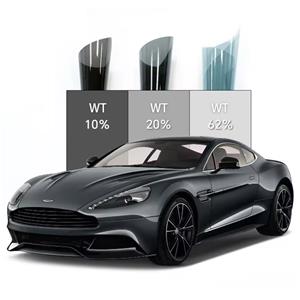
When evaluating car window darkening film, buyers should examine visible light transmission, commonly called VLT. A lower VLT value means that less visible light passes through the film and glass combination. Nevertheless, actual performance depends on the original glass, film construction, installation quality, and local regulations.
Comparing Common Automotive Film Technologies
Dyed films use colorants to create a darker appearance. They are often selected for budget-conscious projects where styling and basic glare reduction are priorities. Their color stability depends on the quality of the materials and manufacturing process.
Metallic car tint uses reflective metallic components to influence solar energy transmission and reflection. Depending on the formulation and layer structure, it can provide useful heat-management performance and a distinctive appearance. Buyers should also check whether the metallic construction affects radio-frequency signals, mobile reception, GPS, or other electronic systems.
A metalized window film may offer a different balance of reflectivity, visible light transmission, and solar control from dyed or ceramic alternatives. Performance should be assessed through actual test data rather than product descriptions alone. For fleets, dealerships, and automotive accessory distributors, repeatable specifications are particularly important because inconsistent batches can create installation and customer-service problems.
Ceramic products use specialized nonmetallic materials to control selected portions of solar energy. Some can provide substantial infrared rejection without relying on a highly reflective appearance. They may be suitable for customers who prioritize heat control and electronic signal compatibility, although product performance varies considerably by construction.
Why Windshield Tint Requires Special Attention
Windshield tint deserves separate consideration because the front windshield has a direct effect on forward visibility. Any windshield tint must comply with the applicable local rules governing permitted film areas, light transmission, reflectivity, and driver visibility. Regulations differ by country, state, and vehicle category.
A suitable windshield tint product should emphasize optical clarity and controlled light transmission. Haze, distortion, uneven application, or excessive darkness can interfere with the driver's ability to identify road hazards. Installers should confirm the film's suitability for the particular glass before proceeding.
Buyers should also distinguish between a full windshield film and a legally permitted upper sunstrip. These applications are not interchangeable. Before ordering car window darkening film for a vehicle program, distributors should confirm the intended installation area and the relevant compliance requirements.
How Aicksn Can Support Consistent Product Quality
For a professional film supplier, manufacturing quality begins with controlling incoming raw materials and maintaining stable processing conditions. A practical quality program should assess coating uniformity, film thickness, color consistency, surface cleanliness, adhesion, and roll-to-roll variation.
Aicksn can use a structured inspection framework to support customer confidence. For example, a proposed incoming-material inspection may sample each production lot, while finished rolls can be checked for visible contamination, edge damage, wrinkles, and surface defects. Optical testing can evaluate visible light transmission and haze, while suitable accelerated-aging procedures can help assess color stability and resistance to environmental exposure.
These are recommended quality-control practices, not claims of completed tests or certified factory results. Aicksn should publish actual equipment capabilities, inspection frequencies, and measured results only after confirming them against internal records.
A reliable auto tint film program should also maintain traceability. Each production lot can be linked to its material specifications, processing records, inspection results, and packaging information. Such traceability helps identify the source of a problem and supports consistent replenishment orders for overseas distributors.
Selecting Film for Different Applications
Private car owners may prioritize comfort, appearance, and privacy. Luxury vehicle customers may prefer subtle shades with excellent optical clarity. Commercial fleets may focus on repeatable performance, stable supply, and manageable installation costs. Automotive accessory wholesalers may require several shades, roll widths, and packaging formats to serve different customer groups.
For these applications, car window darkening film should be evaluated against a defined checklist rather than a single headline specification. Buyers should request a product data sheet, sample rolls, installation instructions, test conditions, warranty terms, and applicable compliance documentation.
Metallic car tint can be considered when reflective solar control is desirable, while metalized window film may suit projects that value a particular balance of reflectivity and appearance. In either case, the product should be tested with the vehicle's original glass to understand the combined optical result.
Windshield tint requires an even more careful selection process because small optical defects can become distracting in bright sunlight or at night. A qualified installer should inspect the glass, clean the application area, control dust, and follow the manufacturer's installation guidance.
Building a Better Film Purchasing Strategy
The best purchasing decision combines technical performance with reliable supply. Distributors should compare specifications using the same test methods, confirm that samples represent the intended production grade, and request written clarification for any ambiguous claims. Price should be evaluated alongside defect rates, usable roll length, packaging protection, and after-sales support.
Aicksn New Materials Technology Co., Ltd. can strengthen its position by providing clear product documentation, consistent lot identification, responsive technical communication, and transparent quality evidence. These details help international buyers compare suppliers on measurable criteria rather than marketing language.
Car window darkening film is not simply a cosmetic accessory. When its optical properties, material construction, installation requirements, and regulatory suitability are properly matched, it can contribute to a more comfortable and visually refined driving experience.