Chrome Vinyl Wrap: Reflective Finish and Installation Guide
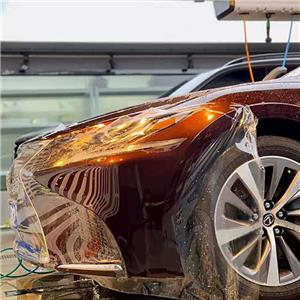
Few automotive finishes attract attention as quickly as a Chrome Vinyl Wrap. Its reflective surface changes dramatically with surrounding light, allowing the same vehicle to appear different throughout the day. This makes chrome film popular for show vehicles, promotional cars, accent panels, and high-impact custom projects.
The visual effect, however, creates additional manufacturing and installation requirements. Reflective surfaces reveal imperfections that might be difficult to see on conventional matte or satin materials.
Why Chrome Requires Precision
When light reflects from a chrome surface, wrinkles, scratches, seams, contamination, and uneven application can become visually prominent. This means the quality of the substrate and installation technique directly affects the final appearance.
The manufacturing process therefore needs strong control over film surface quality. Particles, coating irregularities, scratches, and inconsistent reflective characteristics should be identified before finished rolls leave the factory.
A professional production system can use controlled inspection lighting to identify visible defects more effectively than ordinary warehouse lighting.
Comparing Chrome With Black Finishes
The difference between Chrome Vinyl Wrap and a matte black car wrap is almost entirely visual.
Matte black diffuses light and creates a restrained appearance.
A Gloss Black Vinyl Wrap reflects light while maintaining a classic black color.
A Carbon Fiber Vinyl Wrap combines a patterned appearance with a technical design language.
Chrome maximizes reflection and therefore produces a much stronger visual statement.
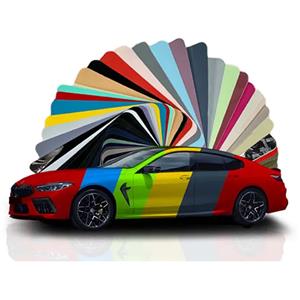
These finishes allow installers to match film characteristics to different vehicle designs and customer requirements.
The Importance of Dimensional Stability
Vehicle surfaces are rarely flat. Modern bodywork contains complex curves, recessed handles, sharp character lines, and aerodynamic components.
Automotive Vinyl Wraps need enough flexibility to conform to these shapes. Cast film is widely used for complex vehicle applications because its production method provides low memory and strong dimensional stability.
For chrome products, however, installers must also consider how stretching affects the reflective appearance. Excessive stretching can change visual uniformity. Professional application therefore depends on correct panel planning and controlled material handling.
Factory Inspection
A manufacturer such as Aicksn New Materials Technology Co., Ltd. can demonstrate product quality through a structured inspection process.
First, incoming raw materials should be checked against purchasing specifications. During production, coating conditions and film dimensions can be monitored. After finishing, rolls should be inspected for surface defects and edge condition.
Finished rolls can then be labeled with production information to support traceability.
For international customers, consistent packaging is also important. Roll cores, protective wrapping, carton strength, and palletization can all influence whether material arrives ready for professional use.
Installation Considerations
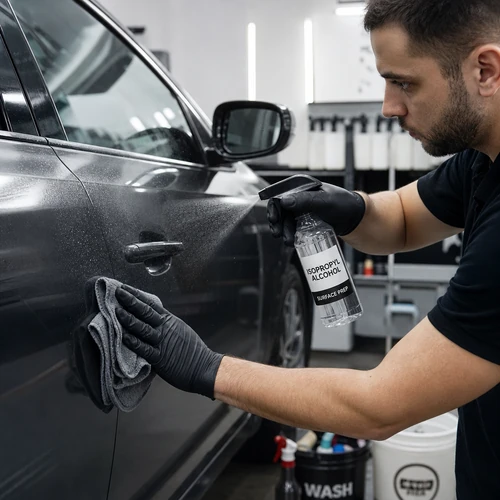
Before applying a Chrome Vinyl Wrap, installers should carefully prepare the vehicle surface. Dirt, wax, oil, and moisture can interfere with adhesion.
Panel planning is equally important. Large uninterrupted sections can produce a cleaner visual effect than unnecessary seams. Complex areas should be evaluated before material is cut.
Heat should be used according to the manufacturer's technical guidance rather than simply increasing temperature whenever the film becomes difficult to position. Controlled heating helps achieve conformity while reducing unnecessary distortion.
Product Development Beyond Appearance
A modern manufacturer should not treat chrome as simply a shiny version of ordinary film. The surface, adhesive system, dimensional stability, roll construction, and packaging all contribute to the final product.
At Aicksn, product development can therefore focus on repeatability. A distributor purchasing the same product specification should receive material with consistent width, appearance, surface quality, and roll structure.
That consistency is particularly important for large projects involving multiple vehicles.
The Chrome Vinyl Wrap illustrates the relationship between visual design and material engineering. Together with Vinyl Wraps, a matte black car wrap, Gloss Black Vinyl Wrap, and Carbon Fiber Vinyl Wrap, it provides a flexible set of finishes for automotive customization.