Car Window Darkening Film: Heat Rejection Explained
Car window darkening film is commonly associated with privacy, but its role can extend to glare reduction and solar management. Understanding how film interacts with sunlight helps buyers distinguish genuine technical performance from simple claims based on darkness.
For Aicksn New Materials Technology Co., Ltd., this distinction is important because automotive film can be evaluated through measurable optical and solar-performance parameters.
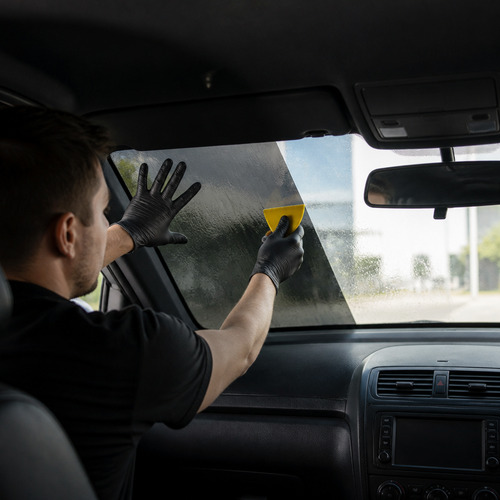
Darkness Is Not the Same as Heat Rejection
The first misconception to address is that a darker film must always reject more heat.
Film darkness is primarily associated with visible light transmission. Heat management involves a much broader part of the solar spectrum.
Solar radiation contains visible, infrared, and ultraviolet components. A film can therefore be relatively light while still being engineered to reject a significant amount of solar energy.
Published automotive film specifications demonstrate this principle by reporting VLT separately from Total Solar Energy Rejection, infrared energy rejection, UV protection, and glare reduction.
A buyer should therefore request complete performance data rather than relying on a single darkness percentage.
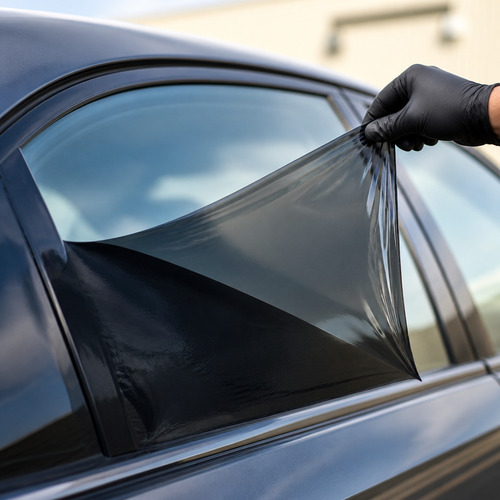
What Is TSER?
Total Solar Energy Rejection, or TSER, is a commonly used metric describing the proportion of total solar energy rejected under specified testing conditions.
The value depends on the test setup, glass substrate, and measurement methodology. This means two products should not be compared solely because both use the phrase "heat rejection."
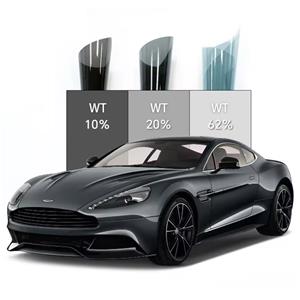
For example, one published automotive specification reports different TSER values for different VLT shades within the same film family.
Aicksn's technical documentation can similarly identify the test conditions used for its products so distributors can make more meaningful comparisons.
Infrared Performance
Infrared radiation is often associated with heat, but "IR rejection" can refer to different wavelength ranges and measurement methods.
One technical data sheet distinguishes between infrared rejection and infrared energy rejection, with IRER covering a broad 780–2500 nm solar infrared range and accounting for transmitted and absorbed energy.
This distinction is valuable when evaluating metallic car tint.
A film with a high IR value over a narrow wavelength range should not automatically be assumed to have the same performance as another film tested over a wider range.
Why Metallic Car Tint Can Be Effective
Metallic car tint uses a metallic layer or component to interact with solar radiation. Reflective behavior can contribute to solar management while also influencing exterior appearance.
A published metallic film series reports total solar energy rejection from approximately 42% to 62% for several dark metallic shades under its stated testing conditions, with UV blocking listed at 99%.
These figures belong to that particular product and test configuration, but they illustrate how a metallic construction can be evaluated quantitatively.
For Aicksn, the key manufacturing objective is consistency: the metallic layer must be distributed evenly so the film maintains predictable optical and solar characteristics.
Car Window Darkening Film and Glare
Glare is another measurable benefit.
As VLT decreases, visible glare can generally be reduced, but excessive darkness can compromise visibility. Therefore, selecting film requires a balance between comfort and safe viewing conditions.
The appropriate balance depends on window position.
Rear windows may use darker film where permitted. Front side windows usually require more visible transmission. Windshield tint requires especially careful selection because forward visibility is critical.
Auto Window Film Quality Control
A factory producing auto window film should control both optical and physical properties.
A practical QC process can include:
Incoming inspection: Raw film, coating materials, adhesive components, and liners are checked against purchasing specifications.
Process monitoring: Coating thickness, web tension, drying conditions, and other process parameters are monitored.
Optical testing: VLT and reflectance are checked against product specifications.
Surface inspection: Rolls are examined for scratches, contamination, bubbles, streaks, and other defects.
Dimensional inspection: Width, thickness, and roll length are checked.
Adhesive inspection: Bonding characteristics are evaluated according to the product specification.
This type of inspection supports consistent material for distributors and installers.
Windshield Tint and Solar Control
A light windshield tint can potentially provide solar-control benefits without creating the visual effect of a dark film.
However, the final glass VLT must remain within the requirements of the relevant market. Australian guidance, for example, specifies at least 70% VLT for applicable windshields.
For this reason, windshield products should be positioned differently from dark rear-window film.
5-Window Tint Applications
A 5-window tint package may combine medium or dark rear film with lighter front-side film depending on the vehicle and local rules.
This approach allows a vehicle to achieve a visually balanced appearance without forcing every window to use identical film.
For distributors, offering several VLT levels can therefore be more useful than offering only one universal shade.
Aicksn can organize its product range around defined VLT categories and corresponding performance data, enabling customers to select material according to climate, vehicle glass, and application.
Measuring Real-World Performance
Laboratory data provides a controlled basis for comparison, but actual vehicle performance depends on the glass, climate, vehicle interior, installation quality, and solar conditions.
Published specifications also caution that results can vary depending on glass properties and other factors.
Therefore, responsible product marketing should present the test method alongside the performance value.
This approach gives Aicksn's international customers a clearer technical reference when evaluating car window darkening film and related automotive film products.