Vinyl Wraps: A Guide to Modern Vehicle Protection
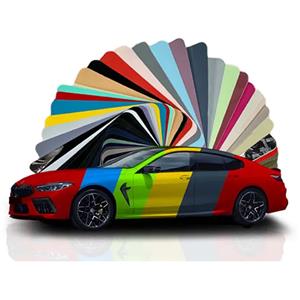
Vehicle customization has moved far beyond traditional repainting. Modern Vinyl Wraps provide vehicle owners, dealers, fleet operators, and automotive brands with a flexible way to change exterior appearance without permanently replacing the original paint finish. Instead of treating a wrap simply as a decorative sheet, buyers increasingly evaluate film construction, surface finish, dimensional stability, adhesive performance, and installation behavior.
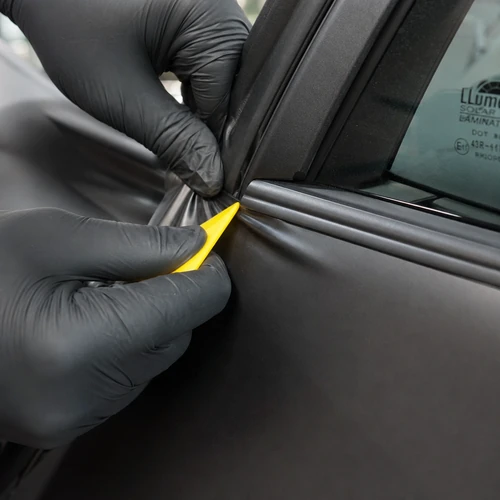
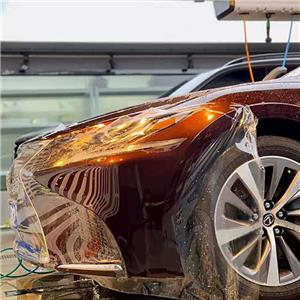
The basic concept is straightforward: an automotive film is applied over prepared exterior panels to create a new visual surface. However, the quality of the finished result depends heavily on the engineering behind the material. A high-quality matte black car wrap, for example, needs a uniform surface texture that does not become patchy after stretching. A Gloss Black Vinyl Wrap requires consistent reflectivity so large panels do not show obvious variations. A Carbon Fiber Vinyl Wrap must maintain both its visual pattern and surface texture around curves, while a Chrome Vinyl Wrap requires particularly careful handling because its reflective appearance can reveal installation defects.
Why Film Construction Matters
Automotive wrap film must balance flexibility and dimensional stability. Industry references commonly identify cast vinyl as a preferred material for demanding vehicle applications because it can conform to compound curves while maintaining relatively low memory after forming.
For manufacturers, this means production control begins before the film reaches an installer. Resin formulation, pigment dispersion, coating uniformity, adhesive consistency, surface treatment, and winding tension can all affect the final product.
At Aicksn New Materials Technology Co., Ltd., manufacturing quality can be evaluated through measurable checkpoints rather than appearance alone. Film thickness consistency, roll winding, surface uniformity, adhesive coating, color consistency, and finished-surface inspection are important indicators of production discipline.
A practical quality system can divide inspection into raw material, coating, finishing, slitting, and final-roll stages. This approach reduces the possibility that a defect affecting one small section will become a problem across an entire roll.
Comparing Four Popular Finishes
A matte black car wrap creates a low-reflection appearance that emphasizes body lines without producing strong highlights. It is particularly effective on vehicles with angular styling because the subdued surface allows the body shape to become the visual focus.
A Gloss Black Vinyl Wrap produces the opposite effect. Its reflective surface creates sharp highlights and can make smooth body panels appear deeper. Gloss finishes, however, make dust, scratches, contamination, and installation marks easier to notice, so surface preparation becomes particularly important.
A Carbon Fiber Vinyl Wrap introduces a technical appearance through a patterned surface. The visual success of this material depends on pattern alignment, dimensional consistency, and controlled stretching. Poorly managed installation can distort the pattern around complex curves.
A Chrome Vinyl Wrap is the most visually reflective option of the four. Its mirror-like appearance can dramatically change a vehicle, but reflective films also make seams, wrinkles, contamination, and uneven tension more visible.
Factory Control and Product Consistency
For an international wrap-film manufacturer, consistency across rolls is as important as the performance of an individual roll. A professional production line should therefore monitor coating width, film thickness, color uniformity, surface defects, adhesive coverage, and roll edges.
For example, a manufacturer can establish inspection points at regular production intervals and record results against predetermined specifications. Finished rolls can then be checked for edge deformation, telescoping, contamination, and visible surface defects before shipment.
Packaging is also part of quality control. Automotive film should be wound under controlled tension and protected from excessive pressure, moisture, and contamination during transportation. A well-produced film can still arrive in poor condition if the roll structure is not adequately protected.
Choosing the Correct Film
The right product depends on vehicle geometry, desired appearance, installation experience, expected service conditions, and maintenance requirements. A full vehicle project with numerous compound curves places different demands on the film than a flat hood accent or roof treatment.
Buyers should therefore ask for technical specifications instead of relying only on names such as “premium” or “high performance.” Important information can include film construction, thickness, adhesive system, recommended installation conditions, outdoor durability, available widths, and finish options.
At Aicksn, the product development philosophy can be built around this practical principle: the appearance seen by the customer should be supported by controlled manufacturing behind the roll.
Modern Vinyl Wraps are therefore more than color-changing materials. A matte black car wrap, Gloss Black Vinyl Wrap, Carbon Fiber Vinyl Wrap, or Chrome Vinyl Wrap represents a combination of polymer technology, coating control, adhesive engineering, finishing accuracy, and installation compatibility. When these elements are controlled together, vehicle customization becomes a repeatable manufacturing process rather than simply a visual trend.