Metalized Window Film vs. Other Automotive Tint Options
Choosing automotive window film involves comparing several technologies that can look similar but perform differently. Metalized window film, dyed film, ceramic film, and hybrid constructions each offer a different balance of appearance, solar control, optical properties, and cost. For vehicle owners and professional distributors, understanding these differences makes purchasing decisions more accurate and reduces the risk of choosing a product that does not match the intended application.
Aicksn New Materials Technology Co., Ltd. can help automotive customers evaluate film options by focusing on measurable product characteristics rather than relying exclusively on marketing descriptions.
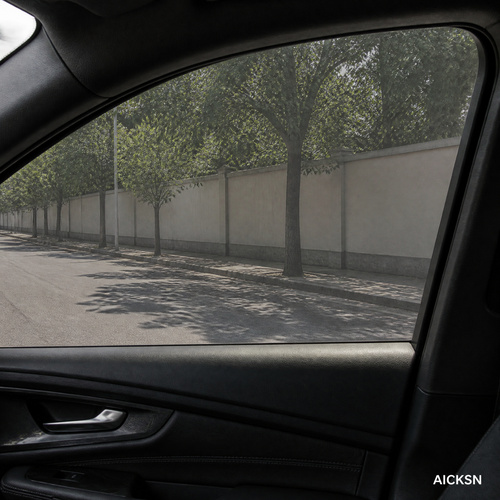
What Is Metalized Window Film?
Metalized window film incorporates metallic materials into its construction to influence the way light and solar energy interact with the glass. Depending on the formulation, the film may reflect selected wavelengths, alter visible light transmission, and produce a distinctive reflective appearance.
The term metalized window film does not identify a single universal specification. Products may differ in metallic composition, layer structure, thickness, adhesive system, and optical performance. Two films marketed under the same category may therefore have different heat-management capabilities and electronic compatibility.
When comparing products, buyers should request technical data covering visible light transmission, ultraviolet rejection, infrared performance, total solar energy rejection where available, reflectivity, and haze. The measurement method and wavelength range should accompany the results.
Comparing the Main Technologies
Dyed film uses colorants to create the desired shade. It is often selected for styling, basic glare management, and cost-sensitive applications. Its long-term appearance depends on the quality of the colorants, film construction, and environmental exposure.
Metalized window film uses metallic components to modify reflection and transmission. This construction can be useful when a customer wants a reflective appearance and particular solar-control characteristics. However, the suitability of a specific product depends on its measured performance and the vehicle's electronic systems.
Metallic car tint is a closely related category often used to describe automotive films with metallic elements. The exact terms may overlap in commercial descriptions, so buyers should confirm the actual construction rather than assuming that the product name guarantees a particular technology.
Ceramic films use specialized nonmetallic materials to control selected wavelengths. Some are designed to provide useful infrared performance while retaining a relatively low-reflectivity appearance. However, ceramic products also vary considerably in quality, and their performance should be verified through appropriate testing.
Hybrid films combine materials or design approaches to balance appearance, performance, and cost. Their actual benefits depend on the specific formulation, making product-level data essential.
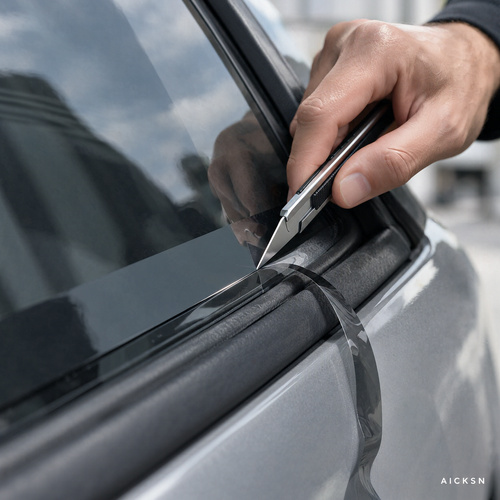
Compare Performance Using Consistent Measurements
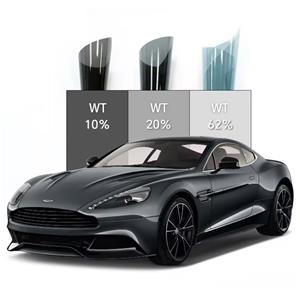
Car window darkening film is frequently judged by shade, but darkness alone does not establish heat rejection or ultraviolet protection. Visible light transmission indicates how much visible light passes through the film-and-glass system. Lower values generally correspond to darker results.
Infrared rejection describes performance across a specified infrared wavelength range. Since manufacturers may use different wavelength ranges and calculation methods, buyers should avoid comparing percentages without examining the underlying test conditions.
Total solar energy rejection can provide a broader measure of how much solar energy is prevented from passing through a tested system. It should be reported using a recognized method and with the relevant glass configuration identified.
An auto tint film should also be assessed for haze and optical distortion. A film may achieve a desirable shade but still be unsuitable if it compromises visibility or creates an uneven appearance. Buyers should compare sample products under the same lighting conditions and, where practical, on equivalent glass.
Consider Electronic Signal Compatibility
Metallic materials can interact with electromagnetic signals. Depending on the film's construction and the frequency involved, some products may affect GPS reception, mobile communications, toll collection systems, or other electronic functions.
This does not mean every metalized window film will create a noticeable problem. The result depends on the specific materials, layer design, signal frequency, vehicle configuration, and location of the antenna.
Before purchasing metallic car tint for a vehicle fleet or premium automotive application, buyers should ask the supplier for any available compatibility data. If the film has not been tested with a particular system, the supplier should explain that limitation instead of making a universal compatibility claim.
Nonmetallic ceramic products may be worth considering when electronic signal transmission is a priority, but compatibility should still be confirmed for the intended vehicle and application.
Why Windshield Tint Needs Separate Evaluation
Windshield tint is subject to special considerations because the driver depends on the windshield for a clear forward view. Regulations may restrict the permitted area, minimum light transmission, or use of aftermarket film on the main viewing portion.
A product suitable for rear side windows may not be appropriate for the windshield. Optical clarity, haze, distortion, glass compatibility, and the presence of cameras or sensors must be considered before installation.
Buyers should verify local rules before selecting windshield tint and obtain professional advice when the vehicle has advanced driver-assistance systems. The final glass-and-film combination should meet applicable requirements rather than relying on the film's standalone specification.
Manufacturing Controls That Matter
Consistent film performance depends on material quality, process stability, coating uniformity, clean handling, and careful conversion into finished rolls. A professional supplier should have documented methods for identifying and controlling defects.
Aicksn can strengthen product reliability through an inspection framework that includes incoming-material checks, dimensional measurements, optical testing, visual inspection, and batch traceability. Finished rolls can be checked for edge damage, contamination, wrinkles, uneven coloration, and other defects that may affect installation.
A proposed sampling plan could evaluate visible light transmission and haze at defined points during production. The acceptance limits should be established for each product grade and verified using calibrated equipment. Adhesion and environmental-aging tests can provide additional evidence about performance under specified conditions.
These measures describe a recommended quality framework, not confirmed Aicksn factory test results. Any published inspection frequency, equipment specification, certification, or pass rate should be supported by company records.
How to Select the Best Option for Each Market
For cost-sensitive customers, dyed film may provide a suitable balance of shade and affordability. Customers who prefer reflective styling may consider metalized window film or metallic car tint. Drivers seeking solar control with a less reflective appearance may evaluate ceramic alternatives.
Car window darkening film for a family vehicle may prioritize comfort, visibility, and interior protection. A commercial fleet may place more emphasis on standardized specifications, stable availability, and straightforward installation. Distributors may need a range of products to address these different requirements.
An auto tint film supplier should make it easy to compare products through clear data sheets, representative samples, installation guidance, warranty conditions, and packaging specifications. For larger orders, buyers should evaluate a production-representative sample before confirming the full shipment.
Aicksn New Materials Technology Co., Ltd. can support this process through transparent technical communication and consistent product identification. The most appropriate film is not simply the one with the strongest marketing claim; it is the one whose verified characteristics match the vehicle, customer expectations, and local requirements.