Metalized Window Film: Technology, Advantages, and Applications
Automotive window film is available in multiple constructions designed to balance solar control, visible light transmission, appearance, and durability. Metalized window film is one option for vehicle owners and professional distributors seeking particular reflective and solar-management characteristics. Understanding how this technology works, where it may be useful, and which quality factors matter can help buyers make more informed purchasing decisions.
Aicksn New Materials Technology Co., Ltd. operates in the automotive window film sector, where clear technical documentation and consistent product quality are important to installers, wholesalers, and vehicle accessory businesses.
What Makes Metalized Window Film Different?
Metalized window film incorporates metallic materials into a layered film construction. These materials can change how visible light and selected wavelengths of solar radiation are reflected, transmitted, or absorbed. The resulting optical behavior depends on the materials used, the layer arrangement, and the manufacturing process.
Some products are designed with a noticeable reflective appearance, while others may have a more subtle finish. Solar performance can also vary. Buyers should therefore avoid treating all metalized window film products as equivalent.
Metallic car tint is another commonly used term for automotive films containing metallic components. In commercial descriptions, the two terms may overlap, but the actual construction should be confirmed through a product data sheet.
A reliable supplier should identify the product's visible light transmission, reflectivity, relevant infrared performance, ultraviolet characteristics, optical haze, and any available total solar energy rejection data. The test method and sample configuration should be clearly stated.
Potential Advantages and Practical Limitations
A metalized window film may offer a reflective appearance and a particular balance of solar reflection and transmission. Depending on its construction, it may help manage solar energy entering the cabin while giving the vehicle a distinctive finish.
However, reflectivity alone does not establish overall thermal performance. Solar energy can be transmitted, reflected, or absorbed, and the final behavior depends on the film and the original glass. Buyers should compare products using appropriate measurements rather than relying on appearance.
Another consideration is electronic signal compatibility. Some metallic constructions can affect the transmission of radio-frequency signals. The impact depends on the material structure, frequency, antenna location, and vehicle configuration. Buyers should request available test information for GPS, mobile communication, toll collection, or other relevant systems.
These limitations do not make metallic film unsuitable for automotive use. They show why product selection should be based on the specific application and verified performance rather than general assumptions.
How It Compares with Dyed and Ceramic Films
Dyed film uses colorants to create the desired shade and appearance. It is often considered for cost-sensitive applications, though color stability and solar performance vary by product.
Metalized window film uses metallic materials to influence reflection and transmission. It may be selected for reflective styling and certain solar-control characteristics, but electronic compatibility deserves attention.
Ceramic films use specialized nonmetallic materials to manage selected wavelengths. Some are designed to provide solar-control performance without a strongly reflective appearance. Their actual performance depends on formulation and should be supported by test data.
Hybrid products may combine different material approaches to achieve a particular balance of cost, appearance, and optical performance. Buyers should examine the actual construction and specifications rather than assume that a product name defines its performance.
Car window darkening film can be selected for privacy, glare management, or styling, but these goals do not always require the same film. A dark shade may reduce visible light substantially without providing the best overall solar control.
Choosing the Correct Shade and Application
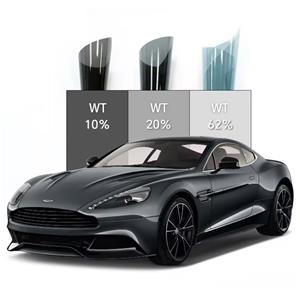
Visible light transmission is one of the most important measurements when selecting automotive film. A lower VLT value generally means that less visible light passes through the film-and-glass system, creating a darker appearance.
The ideal shade depends on the vehicle, driver preference, and local legal requirements. Excessively dark film may make it more difficult to see pedestrians, cyclists, or other hazards at night. Buyers should confirm permitted light transmission for each window position before ordering.
An auto tint film intended for the rear windows may not be suitable for the front side windows or windshield. The windshield requires particular attention because it is essential to forward visibility.
Windshield tint must comply with local rules governing permitted areas, minimum light transmission, and optical performance. It should also be compatible with the vehicle's original glass and any cameras or sensors that depend on a clear view through the windshield.
Quality Assurance in Automotive Film Production
Consistent product quality requires control throughout the manufacturing process. Raw-material variation, contamination, uneven coating, dimensional inconsistencies, and poor roll handling can affect finished-film performance and appearance.
A professional factory quality framework should establish requirements for incoming materials, in-process checks, finished-roll inspection, and batch identification. Relevant tests may include film thickness where applicable, width, visual condition, visible light transmission, haze, adhesion, and color stability.
A proposed sampling program could inspect representative rolls from each production lot and compare results against the approved product specification. Additional samples may be taken from different points in a run when process stability or customer requirements justify more extensive inspection.
For example, a quality team could document the optical readings of three samples from a selected production lot and compare them with the approved specification. The number of samples, measurement points, and acceptance limits should be established by the actual quality plan rather than treated as universal values.
Environmental-aging tests may help evaluate changes in appearance under controlled conditions. Adhesion testing can provide information about how the product behaves under a specified procedure. The resulting data should be recorded with the test method, conditions, sample identification, and acceptance criteria.
These are recommended quality-control practices. Aicksn's actual equipment, production capacity, inspection frequency, and measured results should be verified through company documentation before publication.
Packaging, Storage, and Transportation
Automotive film can be damaged if finished rolls are handled or stored incorrectly. Excessive pressure, moisture, contamination, or physical impact may affect the roll edges or surface condition.
Suitable packaging should protect the product during handling and transportation. Buyers should confirm the roll dimensions, core specifications where applicable, carton protection, labeling, and storage instructions before placing an order.
Lot identification is particularly useful for distributors managing multiple shades or product grades. Clear labels and traceable records help ensure that the correct film is selected for installation and that repeat orders match the previously approved specification.
Aicksn can strengthen the purchasing experience by providing accurate product identification, consistent packaging information, and a clear process for reporting damaged goods or suspected manufacturing defects.
Applications Across the Automotive Market
Private vehicle owners may choose metalized window film for its appearance and selected solar-control properties. Automotive accessory retailers may carry multiple shades to serve different customer preferences. Installation businesses need predictable handling characteristics and technical guidance, while fleet operators may prioritize standardized specifications and dependable replenishment.
Car window darkening film should be matched to the intended window position and customer requirements. Metallic car tint may be suitable when a reflective appearance is desired, while ceramic alternatives can be considered when a less reflective finish is preferred.
For windshield tint, optical clarity and legal suitability remain essential. An auto tint film should also be evaluated for installation compatibility, performance consistency, and the availability of supporting documentation.
What International Buyers Should Request
Before purchasing, distributors should request a current technical data sheet, representative samples, available test reports, installation guidance, storage instructions, and warranty terms. They should also confirm order quantities, available roll sizes, packaging, and the supplier's approach to handling quality complaints.
Aicksn New Materials Technology Co., Ltd. can help professional customers compare options by presenting accurate specifications and maintaining consistent product identification. Transparent communication makes it easier to evaluate metalized window film alongside other automotive film technologies.
The most effective product strategy is built on measurable performance, appropriate application, and reliable manufacturing controls. When these factors are considered together, buyers can choose automotive window film with greater confidence and offer customers a clearer explanation of its benefits and limitations.