How to Plan a Professional Full-Body Car Wrap Project
A successful full-body car wrap begins with planning rather than film application. Before the first panel is covered, installers need to identify the vehicle's surface condition, calculate material requirements, select the appropriate finish, and determine how panels will be handled.
The same planning principles apply whether the project uses PPF wrap, chrome wrap, carbon wrap, or matte wrap.
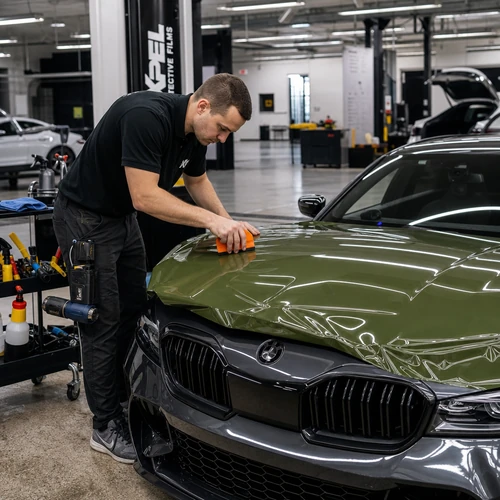
Step One: Define the Objective
Every project should begin with a clear objective.
Is the customer trying to protect factory paint?
Choose PPF wrap.
Is the customer seeking maximum visual impact?
Consider chrome wrap.
Does the customer want a motorsport appearance?
Consider carbon wrap.
Does the customer prefer a sophisticated low-reflection finish?
Choose matte wrap.
Does the customer want a complete visual transformation?
Plan a full-body car wrap.
This decision determines the material category before installation begins.
Step Two: Inspect the Vehicle
The substrate must be inspected before film application.
Existing scratches, dents, peeling paint, contamination, or previous repairs can affect installation.
Professional vehicle body-film training specifically requires surface assessment before applying film.
A film cannot correct every underlying body defect.
Step Three: Select the Material
Material selection should consider panel complexity, environmental exposure, desired appearance, maintenance, and protection requirements.
Aicksn's product range includes PPF products and color-change automotive films.
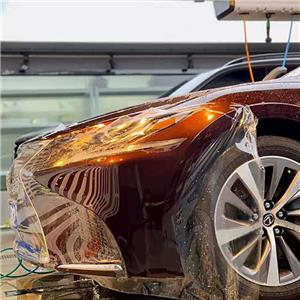
Its satin PPF products are described as scratch-resistant, stain-resistant, UV-resistant, chemical-resistant, and highly conformable.
Its matte black product uses a five-layer construction and is described as highly flexible.
Step Four: Calculate Material
A complete vehicle requires more material than the visible surface area alone suggests.
Installers need additional material for trimming, repositioning, edges, complex shapes, and possible replacement panels.
Aicksn publishes a 1.52 m × 17 m roll size for one color-change film product.
This gives professional installers a clear basis for inventory planning.
Step Five: Plan Panel Sequence
Panel sequence affects efficiency.
Large flat panels may be easier to begin with, while complicated bumpers and mirrors require more attention.
The installer should also consider how seams and edges will appear.
Pattern planning is particularly important with carbon wrap, because the texture may have a directional appearance.
Step Six: Prepare the Surface
Surface preparation is one of the most important stages.
Dust, grease, wax, road contamination, and other residues can interfere with adhesion.
The Australian vehicle-film application standard emphasizes substrate preparation before film installation.
A clean surface provides a more predictable foundation.
Step Seven: Apply the Film
Application requires controlled positioning, tension, pressure, and heat where specified.
For a matte wrap, installers should avoid unnecessary handling of the visible surface.
For chrome wrap, maintaining a smooth surface is especially important.
For PPF wrap, pattern alignment and edge placement can be critical.
For carbon wrap, pattern orientation must be monitored.
Step Eight: Inspect the Finished Panel
Every panel should be inspected before moving to the next stage.
The Australian professional standard specifically calls for final inspection to ensure that the work meets expected quality requirements.
A complete vehicle should also receive a final inspection after all panels are installed.
Factory Quality Supports Installation Efficiency
The quality of the film affects every step of this workflow.
Aicksn describes its production process as covering raw material evaluation, film production, surface treatment, and final inspection.
The company also references ISO 9001, SGS certification, advanced manufacturing machinery, and product quality inspection capability.
These systems support consistency from roll to roll.
More Than 300 Finish Options
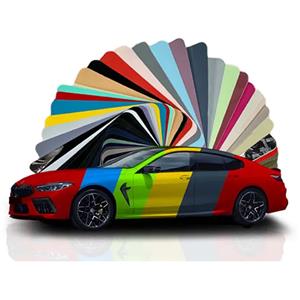
Aicksn's published color-change range contains more than 300 colors and finishes.
This allows installers to develop different visual concepts.
A conservative matte finish can be used for a luxury sedan.
Carbon accents can be added to a sports vehicle.
Chrome can create a show-car appearance.
A full-body color transformation can create a completely new vehicle identity.
Supply Reliability Matters
Installation businesses also need predictable supply.
Aicksn states that large quantities of its color-change film are available from stock and lists delivery times of less than seven days for the referenced product.
For a professional workshop, this can help reduce project delays caused by material shortages.
Maintenance Planning
The customer should receive maintenance guidance after installation.
Different films require different care.
A matte wrap should not be polished like gloss paint.
A chrome wrap requires careful cleaning to preserve its reflective surface.
A carbon wrap should be cleaned without damaging its textured appearance.
A PPF wrap should follow the supplier's specific care instructions.
Building a Repeatable Workflow
The most successful wrapping businesses do not treat each vehicle as an experiment.
They create repeatable procedures for:
Vehicle inspection
Film selection
Material calculation
Surface preparation
Panel measurement
Installation
Edge finishing
Quality inspection
Customer handover
This process improves consistency and helps reduce material waste.
Final Planning Checklist
Before beginning a full-body car wrap, confirm:
The vehicle surface is suitable.
The film type matches the customer's objective.
Enough material is available.
Panel sequence has been planned.
Pattern direction is understood.
Installation tools are ready.
Quality inspection points are defined.
Maintenance guidance is prepared.
With documented film construction, a broad portfolio, structured manufacturing controls, and supply capabilities, Aicksn provides professional installers with a practical material base for different automotive wrapping projects.