How Automotive Film Quality Affects Wrap Installation Results
A professional wrap installation begins with more than an experienced installer. The film itself has a direct influence on application speed, panel coverage, appearance, edge finishing, and long-term performance.
Whether the project uses PPF wrap, chrome wrap, carbon wrap, matte wrap, or a complete full-body car wrap, material quality is one of the foundations of the final result.
Why Film Quality Matters
Automotive film must perform on three levels.
First, it needs to remain stable during storage and transportation.
Second, it needs to behave predictably during installation.
Third, it needs to remain stable after installation under real-world environmental exposure.
A film that looks attractive on a sample board may still be difficult to install if its adhesive, liner, thickness, surface coating, or flexibility is inconsistent.
PPF Wrap Requires Material Precision
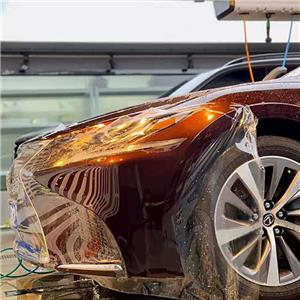
A PPF wrap has particularly demanding performance requirements because it is designed for protection.
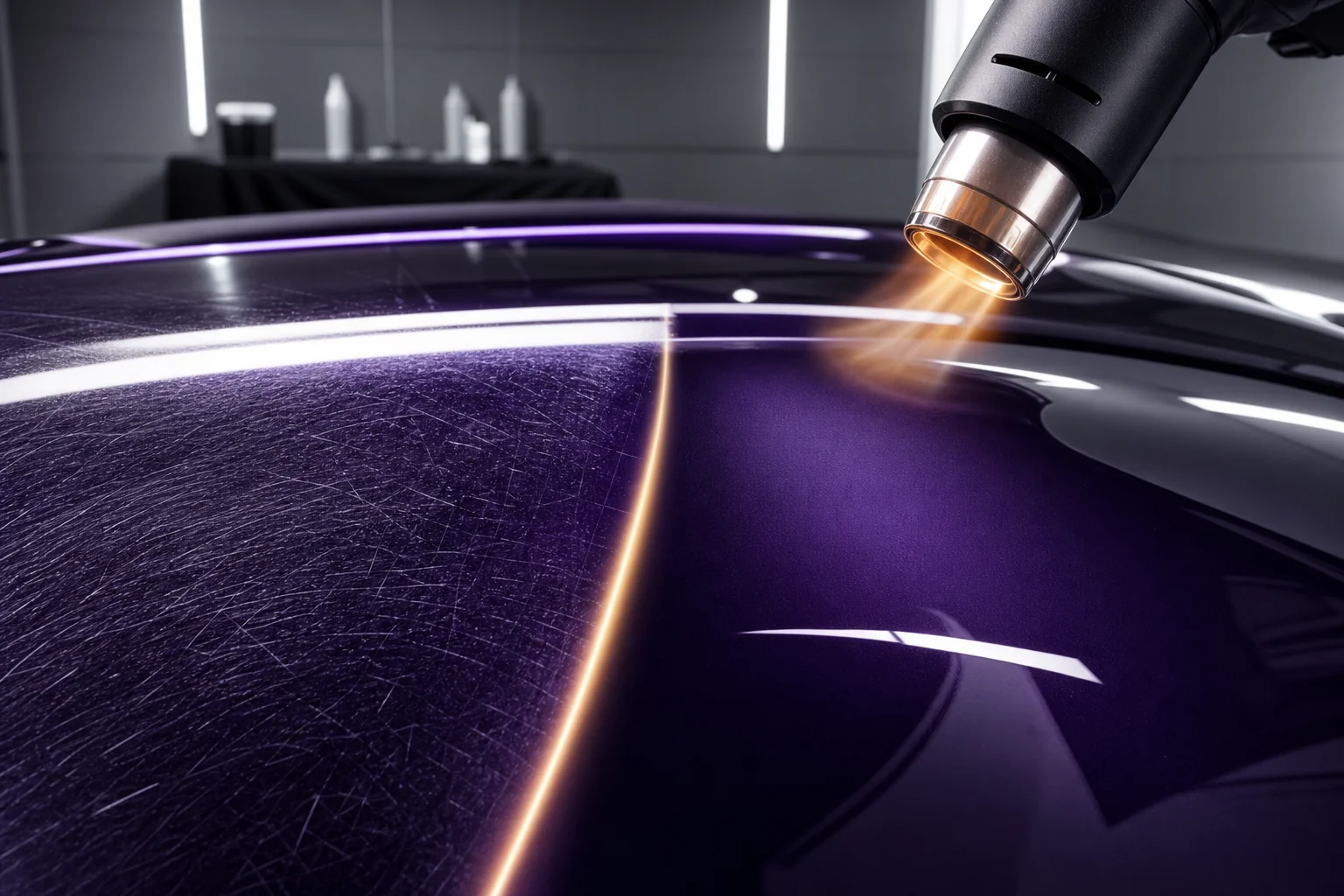
Aicksn's published PPF information describes a multilayer system with scratch resistance, stain resistance, UV and chemical resistance, self-healing properties, and high conformability.
Each characteristic depends on controlled material construction.
If the topcoat is inconsistent, surface appearance can vary. If the adhesive is inconsistent, installation behavior can change. If the polymer layer lacks stability, stretching performance can be affected.
Chrome Wrap Exposes Defects
A chrome wrap is especially sensitive to surface quality.
Reflective film can magnify visual inconsistencies because light is reflected across the panel.
For this reason, installers need a clean substrate, careful handling, accurate positioning, and controlled tension.
Chrome projects should be treated as precision applications rather than ordinary decorative wrapping.
Carbon Wrap Requires Pattern Control
A carbon wrap introduces another quality requirement: pattern consistency.
If the pattern is directional, installers must consider how it flows across adjacent panels.
A high-quality film should provide a stable visual pattern that remains coherent after installation.
Pattern distortion can occur if the film is stretched excessively, which is why application technique and film flexibility must be considered together.
Matte Wrap Depends on Surface Uniformity
A matte wrap does not rely on reflection to hide surface variations.
Its visual quality depends on uniform texture.
Aicksn's matte black film uses a five-layer construction and is described as having a scratch-resistant top layer and strong flexibility. The company states that it can stretch up to three times its original size under appropriate conditions.
The combination of surface engineering and flexibility helps installers work on complex automotive panels.
Full-Body Car Wraps Increase the Challenge
A full-body car wrap involves many panels.
That means there are more opportunities for variation in color, texture, alignment, and edge finishing.
The installer must also calculate material requirements accurately.
Aicksn publishes a 1.52 m × 17 m roll format for one of its color-change products.
Having defined roll dimensions helps professional installers estimate material consumption and project requirements.
Factory Quality Control
Aicksn states that its production process includes material evaluation, manufacturing control, surface processing, and final inspection.
Its published product information also references ISO 9001, SGS certification, advanced manufacturing machinery, and a product quality inspection center.
These systems are important because film production involves multiple stages.
Raw materials must be consistent.
Coating must be controlled.
Lamination must be stable.
Adhesive must be uniform.
Surface treatment must remain consistent.
Finished rolls must be inspected.
Why Batch Consistency Matters
A professional wrapping studio may purchase film repeatedly.
If the same product behaves differently from one production batch to another, installation planning becomes difficult.
For a full-body car wrap, even small differences can become visible when adjacent panels are covered.
This is why quality management should focus on repeatability, not simply passing one inspection.
The Role of Material Selection
Film quality starts with raw materials.
Aicksn's automotive film information emphasizes material research and manufacturing technology.
Different products require different material characteristics.
PPF needs protection and conformability.
Matte film needs stable surface texture.
Chrome requires optical consistency.
Carbon film needs pattern stability.
Each product therefore requires a different balance of properties.
Installation Still Matters
Good film cannot eliminate the need for skilled installation.
Professional application includes surface preparation, panel measurement, pattern planning, controlled film application, trimming, and final inspection.
This is why the best results come from combining good material with controlled installation procedures.
Aicksn's Product Range
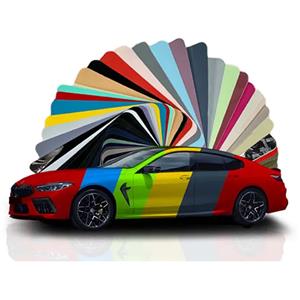
Aicksn publishes more than 300 colors and finishes across its color-change portfolio.
This range allows installers to work across multiple vehicle styles.
A customer may want a matte SUV, a carbon sports car, a chrome show vehicle, or a protective PPF installation.
A supplier capable of supporting different categories can help installers manage a wider range of projects.
Evaluating a Supplier
Before selecting an automotive film supplier, buyers should consider:
Published material specifications
Quality-control procedures
Manufacturing equipment
Inspection capability
Roll consistency
Product range
Stock availability
Delivery performance
Technical support
Aicksn's published information provides measurable data across several of these areas, including product construction, roll dimensions, stock availability, delivery claims, certification references, and manufacturing systems.
Final Perspective
The appearance of a wrap is visible to everyone, but much of its quality is determined before the film reaches the installer.
A stable PPF wrap provides a stronger foundation for protection.
A consistent chrome wrap produces a cleaner reflective effect.
A well-engineered carbon wrap maintains its pattern.
A stable matte wrap preserves its intended surface texture.
A reliable full-body car wrap depends on all of these factors working together across multiple panels.
For professional installers, material quality is therefore not an optional detail. It is part of the installation process itself.