Auto Window Film: Key Factors for Choosing the Right Type
Auto window film is available in many constructions, shades, and performance levels. Buyers may encounter dyed, metallic, hybrid, carbon, and other film technologies, each designed around different combinations of appearance, solar control, privacy, and durability.
For an automotive film manufacturer, the challenge is not simply producing darker material. It is producing film with predictable optical and physical characteristics across every roll.
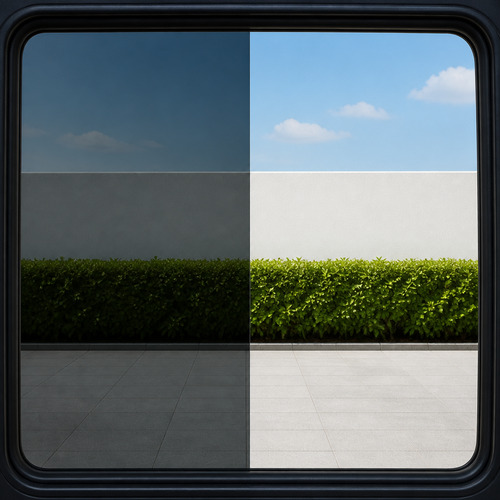
Start With the Glass
The first consideration when selecting auto window film is the original vehicle glass.
A vehicle may use clear glass, slightly tinted glass, privacy glass, or specialized solar-control glazing. Applying the same film to each type of glass can produce very different final results.
For example, a 35% film installed on clear glass will not necessarily have the same final VLT as the same film installed over factory-tinted glass.
This is why automotive film specifications should clearly distinguish film VLT from the measured VLT of the final glass-and-film system. Japanese automotive film guidance explicitly emphasizes this distinction for driver-related glazing.
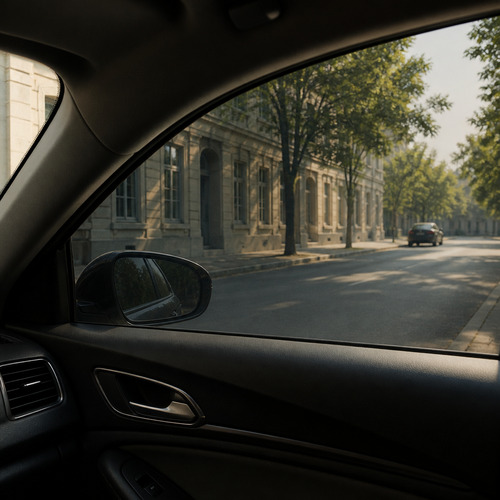
Understanding Major Film Properties
When evaluating auto window film, buyers should consider at least six technical categories:
VLT: Indicates visible light transmission.
TSER: Describes total solar energy rejected under a defined test method.
UV protection: Indicates how much ultraviolet radiation is blocked.
IR performance: Describes performance within a defined infrared wavelength range.
Reflectance: Indicates how much visible light is reflected.
Glare reduction: Describes reduction in visible glare.
Published automotive film data presents these metrics separately because each describes a different physical characteristic.
Aicksn can use this structure when developing product documentation for international distributors.
Why Metallic Car Tint Deserves Attention
A metallic car tint uses a metallic component to influence light and solar radiation. This can create a characteristic appearance while contributing to solar-control performance.
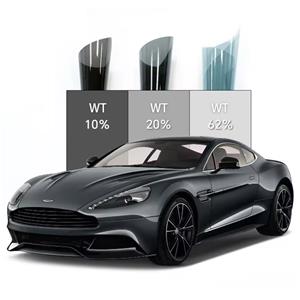
Published data for one metallic series reports, for example, VLT levels of approximately 4%, 9%, 21%, and 30% for different shades, with corresponding changes in total solar energy rejection and glare reduction. The same technical data reports up to 99% UV blocking for the listed metallic products.
These figures are product-specific rather than universal benchmarks. They illustrate why buyers should compare complete specifications instead of relying on the term "metallic."
Choosing Car Window Darkening Film
Car window darkening film is often purchased for privacy and appearance, but shade selection should also consider driving conditions.
Very dark rear film may be suitable for applications where local regulations permit it, while front-side windows generally require greater visible transmission.
The vehicle's intended use matters as well. A family vehicle used at night may benefit from a balanced shade that maintains rear visibility. A show vehicle may prioritize appearance. A commercial vehicle may require a combination of privacy and daytime solar control.
The correct product is therefore determined by application rather than darkness alone.
Windshield Tint Requires Separate Evaluation
Windshield tint should be treated as a specialized application.
The windshield occupies a critical position in the driver's visual field, so optical quality and legal VLT requirements become especially important. Regulations vary by jurisdiction. In Victoria, Australia, for example, the general windshield requirement is at least 70% VLT for applicable passenger vehicles, with specific rules for tinted bands.
This means an auto window film range should clearly identify products intended for windshield use.
5-Window Tint and Package Planning
A 5-window tint package is commonly discussed as a convenient way to treat multiple side and rear windows. However, package design should account for differences in original glass.
The five windows may not all have the same glass composition. A rear quarter window, rear door window, and front door window can have different shapes and different factory tint levels.
For a distributor, this means a 5-window tint product should ideally be specified by window position, target VLT, roll width, and installation requirements rather than by package name alone.
Manufacturing Consistency
A professional auto window film factory needs process control at several stages.
Raw materials should be inspected before entering production. Film thickness should remain within the defined product tolerance. Coating or metallization should be controlled to minimize optical variation. Adhesive coating should remain uniform. Finished rolls should be inspected for scratches, contamination, streaks, bubbles, and other visible defects.
JIS S 3107 provides a useful example of how automotive film quality can be defined through measurable properties including transparency, uniformity, adhesion, dimensional stability, weather resistance, and appearance.
Aicksn can document these characteristics with batch inspection records, allowing export customers to trace product specifications.
Comparing Suppliers More Effectively
A professional buyer should ask for more than a product photograph.
Useful questions include:
What is the nominal VLT?
What glass was used for testing?
What test standard was applied?
How is TSER measured?
What wavelength range is used for IR performance?
What is the film thickness?
What adhesive system is used?
How are finished rolls inspected?
What is the acceptable appearance tolerance?
How are batches identified?
Published technical data often warns that performance varies according to glass type and test conditions.
This information makes supplier comparisons much more meaningful.
For Aicksn, product quality can be communicated through measurable specifications, production traceability, controlled film construction, and consistent roll inspection rather than relying solely on marketing terminology.