Metallic Car Tint vs Dyed Film: Key Performance Differences
The choice between metallic car tint and dyed film is often presented as a simple appearance decision, but the underlying constructions can produce different optical and solar characteristics. Understanding those differences helps distributors, installers, and vehicle owners select film according to actual application requirements.
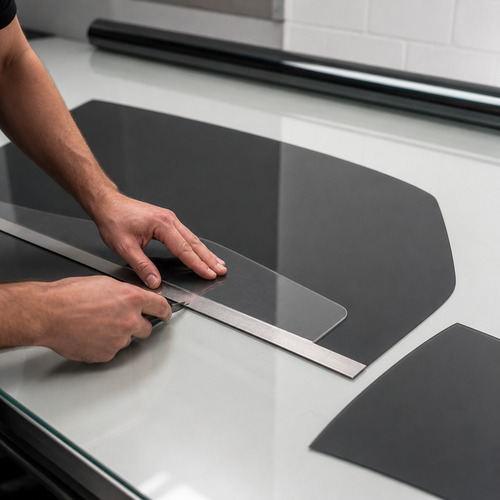
How Dyed and Metallic Films Work
Dyed automotive film uses colorants within the film construction to create its visual shade. Metallic film incorporates a metallic component that can alter light reflection and solar-energy behavior.
This does not mean that every metallic film will outperform every dyed film. Product quality depends on the actual formulation, manufacturing process, thickness, adhesive, and testing method.
The most reliable comparison therefore comes from measurable specifications.
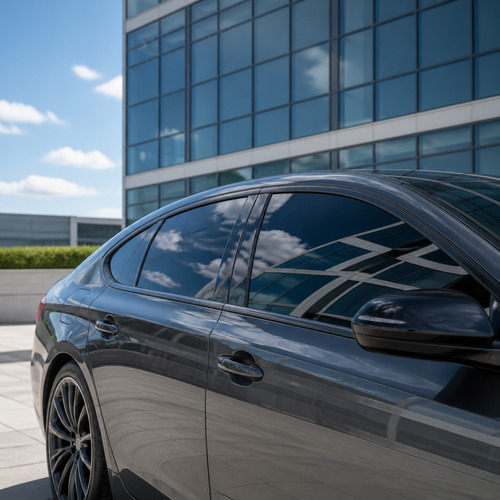
VLT as the First Comparison
Visible Light Transmission is one of the easiest specifications to understand.
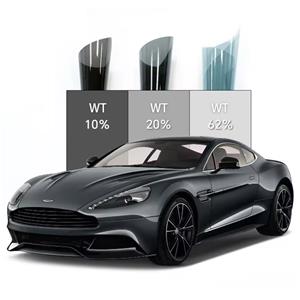
A high-VLT film appears lighter and permits more visible light to pass through. A low-VLT film appears darker.
However, the final VLT depends on the original glass. If factory-tinted glass is already dark, adding either a dyed film or metallic car tint can produce a much lower final transmission.
Japanese industry guidance emphasizes that the relevant value for regulated windows is the VLT of the completed glass-and-film system.
Solar Performance
The second major comparison is solar control.
Metallic car tint can use reflective characteristics to reduce the amount of solar energy entering the vehicle. Dyed films can also provide solar control, but their performance depends heavily on formulation.
Published automotive specifications show why performance should be measured rather than inferred from appearance. One metallic film series reports VLT, total solar energy rejection, glare reduction, UV blocking, and infrared-related measurements for each shade.
For a manufacturer such as Aicksn, publishing this type of technical information can help buyers select the appropriate film.
Reflectance and Appearance
Metallic film may produce a more reflective exterior appearance than dyed film.
Some vehicle owners prefer this because it creates a distinctive premium appearance. Others prefer a neutral, low-reflective appearance.
Reflectance should therefore be treated as a product specification rather than an automatic measure of quality.
Some regulations also limit visible reflectance. Victoria, for example, specifies that the reflectance of a window fitted with film must not exceed 10% under its applicable vehicle requirements.
This illustrates why market-specific specifications matter.
UV Protection
Ultraviolet protection is another useful comparison point.
Published automotive film specifications frequently report very high UV protection. A metallic series from 3M, for example, reports 99% UV blocking for several listed metallic shades.
The exact result varies by product and test method, so Aicksn should document the UV performance of each product rather than applying a universal claim to an entire product category.
Adhesive and Installation
Film construction is not limited to the visible layer.
A complete automotive film can include a base polyester layer, functional coating, adhesive, and release liner. Each component affects installation and long-term performance.
The adhesive should provide reliable bonding while allowing the installer sufficient working time for positioning and squeegeeing.
JIS S 3107 identifies adhesion, flexibility, dimensional stability, weather resistance, and appearance as relevant automotive film characteristics.
For a factory, adhesive consistency should therefore be part of routine quality control.
Car Window Darkening Film: Which Construction?
Car window darkening film can be produced using different technologies.
If the primary objective is visual privacy and cost control, a dyed construction may be appropriate. If the buyer wants a more reflective appearance and specific solar-control characteristics, metallic film may be considered.
A hybrid approach can also combine characteristics from multiple technologies.
The correct choice depends on the product specification rather than the technology name alone.
Windshield Tint Needs Special Treatment
Windshield tint should generally be evaluated separately from side and rear applications.
A metallic construction that provides strong reflection on rear windows may not be appropriate for the windshield if it produces excessive reflectance or insufficient VLT.
The windshield's role in driver visibility means that optical clarity and legal requirements should take priority.
Auto Window Film for Different Markets
International distributors often serve several countries, each with different requirements.
A product suitable for rear windows in one market may not be suitable for front-side windows in another. Some markets specify VLT, others specify reflectance, and some regulate both.
Therefore, Aicksn can support export customers by supplying technical data that allows local compliance checks.
A product specification sheet can include VLT, reflectance, TSER, UV performance, IR measurement range, film thickness, adhesive type, and testing method.
5-Window Tint and Product Matching
For a 5-window tint application, distributors can select different film shades according to window position.
For example, rear windows may use a darker metallic film while front windows use a lighter product where required. The objective is not to force one material onto every glass surface but to create a technically compatible combination.
This approach also allows installers to work with a standardized range of products.
Factory consistency then becomes important. If the same VLT product changes noticeably between production batches, installers may have difficulty maintaining consistent appearance.
Aicksn's manufacturing QC can address this through batch identification, optical inspection, dimensional checks, and controlled production specifications.