Metallic Car Tint: Performance, Style, and Heat Rejection
Automotive window film technology has evolved beyond simple darkened glass. Modern buyers increasingly compare solar performance, visible light transmission, reflectivity, optical clarity, and long-term appearance before selecting a product. Metallic car tint is one option for drivers and distributors seeking a combination of solar management and a distinctive finish. Understanding its construction and limitations helps automotive businesses choose products that meet actual customer requirements.
For Aicksn New Materials Technology Co., Ltd., explaining these technical differences provides an opportunity to demonstrate product knowledge and help international buyers evaluate automotive window film using measurable criteria.
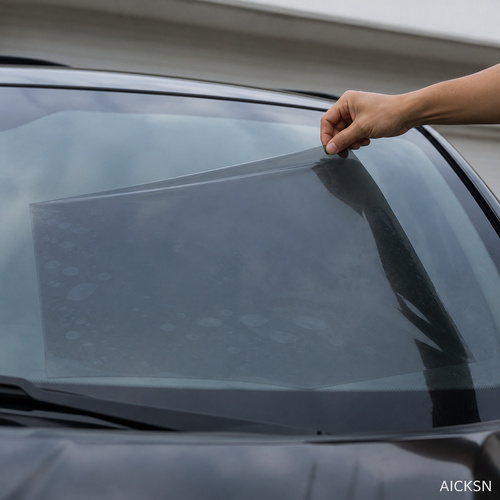
How Metallic Car Tint Works
Metallic car tint incorporates metallic materials into a film structure to influence the transmission and reflection of solar radiation. Depending on the materials, layer arrangement, and coating process, the film may reflect selected wavelengths while reducing the amount of solar energy entering the vehicle.
The result depends on the entire construction rather than the word “metallic” alone. Different formulations can have different visible light transmission values, infrared performance, reflectivity, and color characteristics. Buyers should request product-specific measurements instead of assuming that every metallic product offers the same performance.
A metalized window film may be developed for customers who prefer reflective styling or particular solar-control characteristics. However, reflectivity is not a complete measure of thermal performance. A product's overall behavior depends on transmitted, absorbed, and reflected energy, as well as the original vehicle glass.
When comparing metallic car tint, distributors should examine the test method, wavelength range, and sample configuration behind every performance claim.

Heat Rejection and Cabin Comfort
Solar energy entering a vehicle can warm the dashboard, seats, steering wheel, and other interior surfaces. The amount of heat reaching the cabin depends on sunlight intensity, window area, glass construction, vehicle color, ventilation, and parking conditions.
A suitable auto tint film can help manage solar heat, but the magnitude of the benefit varies by product. Buyers should distinguish infrared rejection from total solar energy rejection. Infrared measurements may cover a selected wavelength band and do not, by themselves, describe all solar energy entering the vehicle.
For a more meaningful comparison, manufacturers can provide visible light transmission, ultraviolet rejection, infrared performance with the tested wavelength range, and total solar energy rejection when measured using an appropriate method. The data sheet should explain whether values apply to the film alone or to a film-and-glass assembly.
Car window darkening film can also reduce perceived glare by limiting visible light transmission. Nevertheless, reducing glare and reducing heat are separate functions. A darker film is not necessarily the most efficient option for thermal comfort.
Metallic Construction Versus Other Technologies
Dyed films primarily use colorants to control appearance and visible light transmission. They may suit projects where affordability and styling are the main considerations. Long-term color stability depends on formulation, material quality, and exposure conditions.
Metallic car tint uses metallic components to influence optical and solar properties. This can create a reflective finish, although the appearance and performance differ across product grades. Some metallic films may also affect radio-frequency signals, so compatibility should be assessed before use in vehicles with sensitive electronic systems.
Ceramic films use specialized nonmetallic materials to manage selected portions of solar radiation. They may be appropriate for buyers who want solar-control performance with limited reflectivity. Their results also depend on the exact formulation, thickness, and testing conditions.
A metalized window film should therefore be compared with dyed and ceramic alternatives using the same measurements. Price, appearance, heat management, electronic compatibility, and warranty conditions all contribute to the final purchasing decision.
Choosing the Right Shade
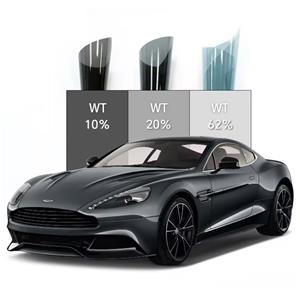
Car window darkening film is often purchased for privacy, styling, and glare management. Visible light transmission is central to shade selection: lower VLT means less visible light passes through the film-and-glass combination.
However, excessively dark glass may reduce visibility in low-light conditions. Drivers must be able to recognize pedestrians, cyclists, and other hazards, especially when reversing or driving on poorly illuminated roads. Local regulations may impose different requirements for front side windows, rear side windows, and the windshield.
A professional supplier should clearly identify the recommended application for each shade. Buyers should not assume that a shade permitted on a rear window is automatically permitted on the front side windows.
Windshield Tint and Electronic Compatibility
Windshield tint presents additional technical challenges. The windshield supports forward visibility and may contain sensors, cameras, antenna elements, or specialized glass layers. Any film applied to this area must be suitable for the vehicle and compliant with local regulations.
A windshield tint product should be evaluated for optical clarity, haze, distortion, and compatibility with the original glazing. A reflective film that performs well on a side window may not be suitable for every windshield application.
Metallic layers can influence electromagnetic transmission, making signal compatibility an important purchasing consideration. Buyers should ask whether the specific product has been assessed for GPS, mobile communications, toll collection systems, and other relevant electronics. If a manufacturer has not performed such testing, the limitation should be communicated honestly.
Quality Control for Metallic Automotive Films
Manufacturing consistency is essential because variations in material thickness, coating distribution, color, or surface condition may affect the appearance and performance of finished film. A professional quality program should address both incoming materials and finished rolls.
Aicksn can use a structured inspection plan covering film width, thickness where applicable, surface cleanliness, edge condition, color consistency, optical haze, and visible light transmission. Sampling can be conducted at defined stages, with acceptance limits established for each product specification.
For example, a proposed production audit could compare samples taken from the beginning, middle, and end of a manufacturing run. This helps identify variation that might not be visible in a single sample. The specific sampling frequency should reflect the product risk, process stability, and customer requirements.
Additional evaluations may include adhesion testing, environmental aging, and checks for changes in color or appearance after exposure. Test conditions and acceptance criteria should be documented so that results can be reproduced and compared across batches.
These practices are recommendations for a quality system; actual Aicksn testing capabilities and results should be confirmed against factory records before being published as company achievements.
What Distributors Should Verify
Automotive accessory distributors should request a current data sheet, representative samples, installation instructions, storage guidance, warranty information, and relevant test reports. The supplier should also clarify roll dimensions, packaging protection, minimum order quantities, and available customization.
For metallic car tint, distributors should assess the reflective appearance under different lighting conditions. For metalized window film, they should verify that the product's technical description matches the intended application. Car window darkening film intended for privacy may have different priorities from a premium product intended to manage solar heat.
Aicksn New Materials Technology Co., Ltd. can build long-term customer relationships by communicating specifications clearly, maintaining lot traceability, and responding promptly to technical questions.
Metallic car tint can be a valuable part of an automotive film portfolio when its benefits and limitations are understood. By combining appropriate product selection with reliable manufacturing controls and careful installation, suppliers can help customers achieve a practical balance between style, comfort, and visibility.