Car PPF ersare the ultimate car protection tool.
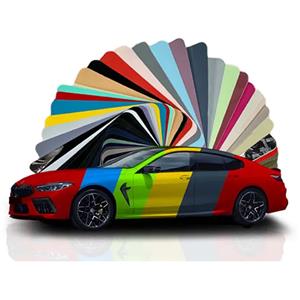
Walking down the street, it's not difficult to notice that some vehicles have bodies that look as shiny as if they just left the factory. Upon closer inspection, you might find they are wrapped in a car film. Car film, fully known as Paint Protection Film (PPF), has seen its popularity continuously rise in the automotive aftermarket in recent years, and is promoted by many merchants as the "ultimate guardian" for cars.
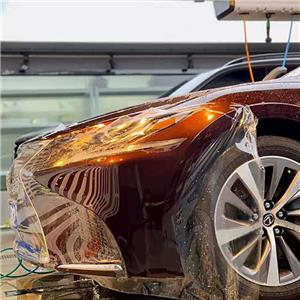
Merchants claim that car film can prevent scratches. In daily driving, minor scrapes and scratches are hard to avoid. For example, when navigating narrow streets, another vehicle might inadvertently leave a mark on your cherished car; or in a parking lot, a carelessly opened door from a neighboring car could bump into your vehicle's body. The car film, high-toughness material, can withstand these external forces to a certain extent, acting like a suit of sturdy armor for the car, protecting the paint from being scratched.
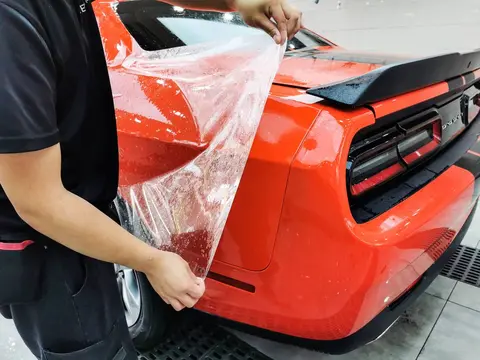
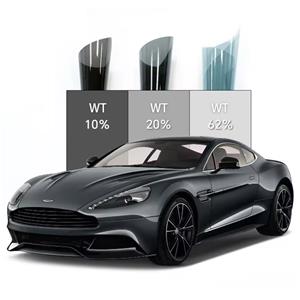
Car film is also said to resist ultraviolet (UV) rays. Prolonged exposure to sunlight can cause car paint to gradually fade and lose its gloss. The erosion from UV rays is like the chisel of time, leaving marks on the car's surface bit by bit. High-quality car films use special materials that can effectively reflect and absorb UV rays, slowing down the aging process of the paint and helping the vehicle maintain a glossy and vibrant appearance.
Furthermore, car film can prevent corrosion. Substances like acid rain, bird droppings, and tree sap, which may seem insignificant, are actually quite corrosive to car paint. The acidic components in acid rain can chemically react with the paint, while bird droppings and tree sap, if left on the surface for a long time, can penetrate the paint and damage its structure. The car film isolates the paint from these corrosive substances, providing comprehensive protection for the paint.
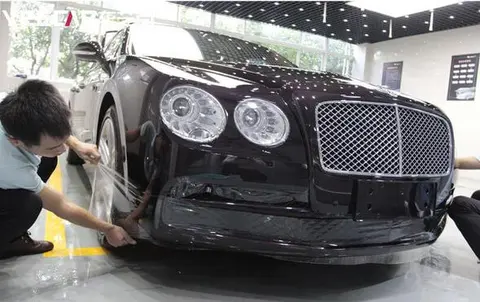
Can Car Film Really Prevent Scratches?
Principle Exploration
The ability of car film to prevent scratches relies on a "double insurance" of its material and structure. Today's mainstream car films use TPU (Thermoplastic Polyurethane Elastomer) material. The remarkable feature of this material is like injecting "elastic genes" into the film. It possesses characteristics of high tension, high tensile strength, and high toughness. It's akin to an incredibly strong, unbreakable "super cling film" that can withstand everyday physical attacks. Coupled with the nano-coating on the car film, this invisible "protective layer" further enhances its scratch resistance. When subjected to minor scrapes, the tight molecular structure of the coating can self-adjust, "filling in" the scratches and achieving self-healing.
Ordinary car paint is like a "fragile glass doll." Although it has a certain hardness and can withstand some minor impacts, it is easily scratched when encountering sharp objects like keys or stones. Moreover, once the paint is damaged, it won't "heal" itself like a car film; it can only be repaired through repainting, which is not only time-consuming and laborious but also carries the risk of color mismatch.
Practical Effect
In real life, the scratch-prevention effect of car film is evident. Take my friend Xiao Li, for example. He recently drove to a shopping mall. In a narrow parking lot aisle, a car forced its way through, and its side mirror scraped directly against his car door. His heart sank at that moment, thinking the paint must surely be damaged. But when he got out to check, he saw a noticeable scratch on the car film, while the paint underneath was completely unharmed. When he got home, he applied a hot towel to the scratched area, and after a while, the scratch on the film disappeared without a trace. This made him full of praise for the car film's scratch-resistant capability.
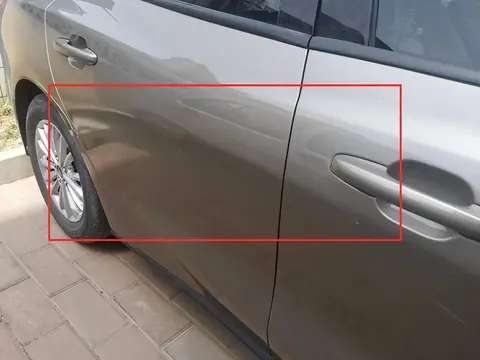
The Harm of UV Rays to Car Paint
UV rays are truly the "invisible killer" of car paint. Car paint, the "face" of the vehicle, is mainly composed of components like resins and pigments. When UV rays irradiate the paint for a long time, the high-energy photons they carry break the chemical bonds of the organic molecules within the paint. The organic components, such as resins, begin to undergo oxidation reactions. The originally tightly arranged molecular structure is destroyed, becoming loose and disordered. This is like a sturdy castle whose internal structure is gradually demolished, losing its original solidity and stability.
This manifests on the paint's surface as a gradual fading of color; the originally vibrant hue becomes dull and lifeless, as if vitality has been drained by time. Furthermore, the paint's glossiness decreases significantly, no longer shining like a new car. The surface texture also feels rough, losing its original smoothness.
Protective Function of Car Film
The reason car film can effectively block UV rays lies in its special materials and advanced technology. Currently, most high-quality car films use TPU material and incorporate UV absorbers and antioxidants. UV absorbers act like little "guardians," capturing and absorbing UV photons and converting them into harmless forms like heat, thereby preventing UV rays from directly damaging the paint. Antioxidants help slow down the oxidation rate of both the film itself and the paint, maintaining their stability.
Relevant experimental data shows that after 500 hours of UV exposure, the glossiness of paint on vehicles without film decreased by 30%, and the color noticeably faded. In contrast, vehicles with high-quality film, under the same exposure conditions, only saw a 5% decrease in paint glossiness, with almost no color change. This comparison fully demonstrates the powerful capability of car film in resisting UV rays.